


-
 Written By:
Erin Andrade, LICSW
-
Edited By:
Phyllis Rodriguez, PMHNP-BC
-
Clinically Reviewed By:
Dr. Ash Bhatt, MD, MRO
 Written By:
 Edited By:
 Clinically Reviewed By:
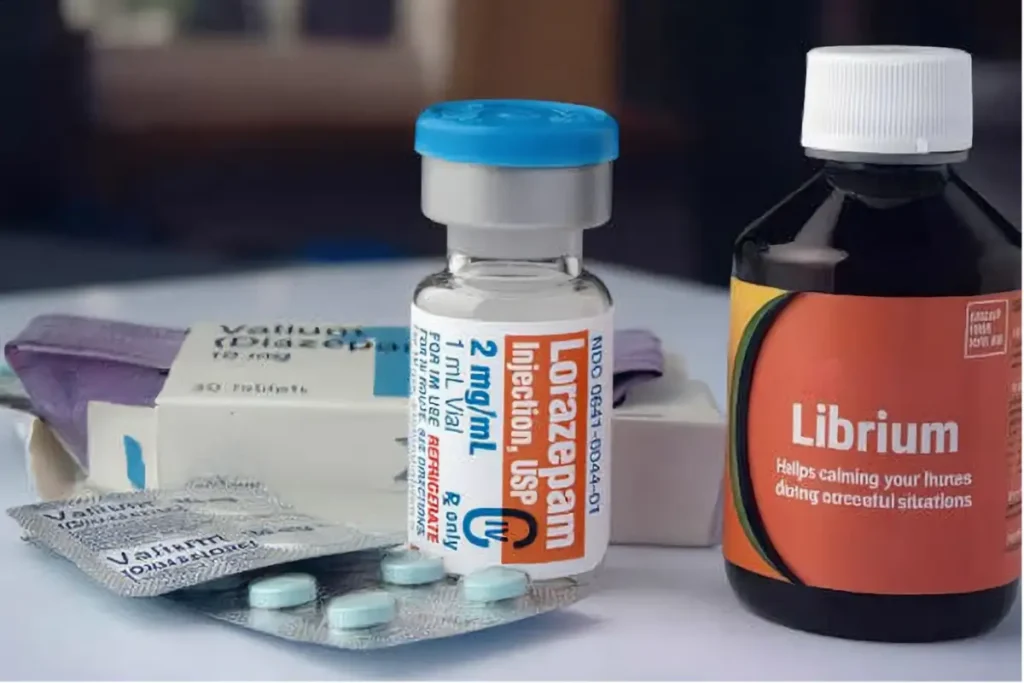
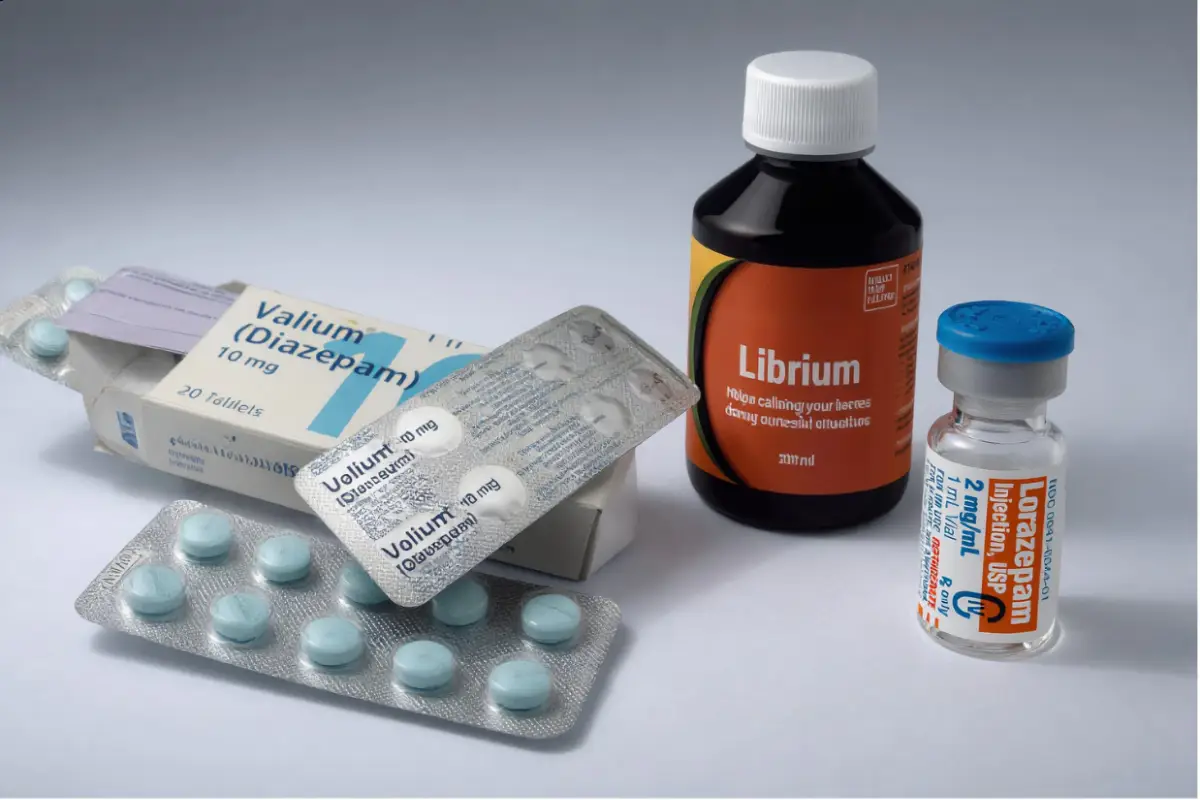
Ativan (lorazepam), Valium (diazepam), and Librium (chlordiazepoxide) are three benzodiazepines commonly used to manage alcohol withdrawal during medical detox. They work in essentially the same way. What separates them is how quickly they take effect, how long they last, and how the body breaks them down. Those differences are why a detox team might choose one medication for one patient and a different one for another.
No one of these medications is universally “best.” In its clinical practice guideline, the American Society of Addiction Medicine (ASAM) states that no particular benzodiazepine is more effective than another, but it favors longer-acting agents because of the clinical benefits of their longer duration. The guideline also adds an important exception for people with liver disease. That is the core of this decision: the right medication depends on the person, their withdrawal risk, and their medical picture.
This guide explains how clinicians think through that choice and what it means for someone considering medical detox for alcohol.
Why Are Benzodiazepines Used During Alcohol Detox?
Benzodiazepines are the first-line medications for alcohol withdrawal because they calm the same brain systems that alcohol affects, and they reduce the risk of seizures and delirium tremens (DTs). Benzodiazepines are cross-tolerant with alcohol and are considered first-line therapy for alcohol withdrawal syndrome.
Heavy, regular drinking pushes the brain to adapt. Alcohol boosts GABA, the brain’s main calming chemical, so over time the brain compensates by turning its own excitatory activity up. When the alcohol stops suddenly, that compensation is left unopposed. The result is tremors, sweating, anxiety, a racing heart, and in more serious cases hallucinations, seizures, or delirium.
Benzodiazepines act on the same GABA system, temporarily taking the place of alcohol’s calming effect. The detox team can then lower the medication in a controlled way while the brain readjusts. According to a summary of the ASAM guideline, benzodiazepines remain the recommended first-line therapy because of their proven record of reducing withdrawal seizures and alcohol withdrawal delirium.
These medications are not meant to make withdrawal symptom-free. Their main job is to keep symptoms manageable and to prevent the complications that make alcohol withdrawal medically dangerous.
Ativan vs. Valium vs. Librium at a Glance
The biggest practical differences are duration of action, active metabolites, and liver dependence.
| Librium (chlordiazepoxide) | Valium (diazepam) | Ativan (lorazepam) | |
| Duration of effect | Long (mostly through its metabolites) | Long | Short to intermediate |
| Onset | Slower; relies on conversion to active metabolites | Fast; enters the brain quickly | Intermediate by mouth; rapid when given IV |
| Active metabolites | Yes, several long-lasting | Yes, including a very long-lasting one | No |
| How the liver processes it | Two-step process, including oxidation | Two-step process, including oxidation | Single, simpler step (glucuronidation) |
| How it’s given | Oral | Oral or IV | Oral, IV, or IM |
| Where it often fits | Uncomplicated withdrawal in people with healthy liver function | Moderate to severe withdrawal; rapid symptom control; front-loading | Liver disease, older adults, medically complex patients, people who can’t take oral medication |
The rest of this article explains why those differences matter.
How Each Medication Works During Alcohol Withdrawal
Librium (Chlordiazepoxide)
Librium has the longest history in alcohol withdrawal treatment. It is still widely used because its effect lasts a long time and fades gradually. Much of that effect comes from what the body turns it into. Research suggests chlordiazepoxide itself has minimal sedative activity, and its effect depends mainly on its metabolites.
Diazepam and chlordiazepoxide share a long-acting active metabolite, desmethyldiazepam, with a half-life of about 72 hours. Chlordiazepoxide’s parent drug has a shorter half-life of about 8 hours, which allows more frequent dosing. In a healthy person, this creates a smooth, steady level of medication across the riskiest days of withdrawal. The same property becomes a liability when the liver can’t process the drug normally, as explained below.
Valium (Diazepam)
Valium is fat-soluble, so it reaches the brain quickly, and its metabolites give it a long tail. That combination makes it useful when a person’s withdrawal needs to be brought under control fast. Diazepam controls agitation rapidly because of its high lipid solubility. Its active metabolites help smooth the course of withdrawal and limit breakthrough symptoms, though prolonged sedation is a risk.
Because diazepam lingers, it effectively tapers itself. In a classic double-blind trial, researchers found that alcohol withdrawal treatment could be simplified with a diazepam loading dose, taking advantage of the kinetic tapering provided by the long half-lives of the drug and its metabolites. Valium can also be given intravenously, which matters in hospital-level care.
Ativan (Lorazepam)
Ativan works differently in the body. It has no active metabolites and a shorter duration, and the liver clears it through a simpler pathway. That makes its effect more predictable in people whose metabolism is impaired. Lorazepam is typically used in symptom-triggered protocols or fixed-dose tapers because of its shorter elimination half-life, its lack of active metabolites, and its lower likelihood of accumulating.
Ativan is also flexible in how it’s given. It can be taken by mouth or given by injection, and it is particularly favored in hospitalized patients because of its rapid onset when given intravenously. The trade-off is that a shorter-acting medication needs closer attention to timing. Short-acting agents have a higher incidence of rebound symptoms and must be tapered carefully to avoid breakthrough symptoms and seizures.
Why Duration of Action Matters in Alcohol Detox
Duration matters because alcohol withdrawal isn’t a single moment. It unfolds over several days, and the most dangerous complications tend to appear later rather than at the start.
Alcohol withdrawal seizures usually occur between 6 and 48 hours after drinking decreases, and DTs typically occur 48 to 96 hours after alcohol is stopped. A long-acting medication like Valium or Librium keeps working through that window without constant redosing. The prolonged half-life of diazepam can lead to accumulation and more side effects, but it may also help prevent withdrawal symptoms that emerge 48 to 72 hours after the last drink.
This is the main reason ASAM leans toward longer-acting agents when there’s no reason to avoid them. The downside is that a long-acting drug is harder to “take back.” If a person becomes oversedated, the medication stays in their system for a long time. A shorter-acting drug like Ativan is easier to adjust, but it requires closer monitoring so that symptoms don’t return between doses.
Neither profile is inherently safer. It depends on who is receiving the medication and how closely they are being watched.
Why Liver Function Can Change the Medication Choice
Liver health is often the single most important factor in choosing among these three drugs. It is also highly relevant to alcohol detox, because many people with long-term heavy drinking have some degree of liver damage.
The difference comes down to metabolism. Chlordiazepoxide and diazepam are first metabolized by hepatic oxidation and then glucuronidation, while lorazepam undergoes only glucuronidation. Benzodiazepine oxidation is decreased in people with liver disease and in older adults. A 2024 review in Hepatology Communications explains that in liver disease, the cytochrome P-450 oxidation step may be impaired, while glucuronidation is largely unaffected.
In practice, that means Librium and Valium can build up in someone whose liver is struggling. Accumulation, with excessive sedation and respiratory depression, can be significant when chlordiazepoxide or diazepam is given to patients with impaired oxidative metabolism. Lorazepam’s metabolism is minimally affected by age and liver disease.
Librium carries a particular risk here. Because it needs to be converted before it fully works, a delayed conversion in liver impairment may mean a considerable cumulative dose is given before a therapeutic response appears. The effect can then arrive late and last a long time.
ASAM builds this into its recommendation: if a patient shows signs of significant liver disease, or if lab results are pending or unavailable, clinicians should use a benzodiazepine with less hepatic metabolization. In most settings, that points toward Ativan.
There is also a diagnostic reason to avoid oversedation in people with liver disease. Distinguishing alcohol withdrawal delirium from hepatic encephalopathy is important but can be difficult. A medication that lingers and clouds thinking can make that distinction harder.
Other Patient Factors That Shape the Decision
Beyond the liver, clinicians weigh the whole person. A few common scenarios show how the reasoning plays out:
A generally healthy adult with a history of moderate withdrawal. A long-acting medication such as Librium or Valium is often a reasonable choice. It covers the multi-day risk window and tapers smoothly.
An older adult, or someone with lung disease or several medical conditions. Accumulation and oversedation become bigger concerns. Older adults also tend to be more sensitive to benzodiazepines. In older patients, the elimination half-life of benzodiazepines is prolonged, which can lead to drug accumulation. A shorter-acting option like Ativan, used with close monitoring, may be preferred.
A person who is vomiting, confused, or unable to take pills safely. The route of administration matters. Librium is taken by mouth. Valium and Ativan can be given intravenously, and Ativan can also be given as an injection into the muscle.
A person whose withdrawal is escalating quickly. Speed of onset becomes the priority. Diazepam is preferred for patients who need rapid symptom control because of its greater lipophilicity and quicker onset.
A person with previous seizures or DTs. A history of complicated withdrawal raises the risk that it will happen again. This affects the intensity of treatment and the setting even more than the choice of drug.
The benzodiazepines have similar efficacy for alcohol withdrawal. One may be chosen over another based on route of administration, onset, elimination half-life, active metabolites, and duration of effect. Those are exactly the variables described above.
Is One Medication Better for Severe Alcohol Withdrawal?
No single medication is best for severe withdrawal. What matters most is rapid, adequate treatment under close medical supervision. When liver function allows, long-acting agents, particularly diazepam, are often used because they control symptoms quickly and keep working through the highest-risk days.
For patients with high withdrawal scores or an increased risk of severe or complicated withdrawal, ASAM recommends giving moderate to high doses of a long-acting benzodiazepine early in treatment, a practice called front-loading, to control symptoms quickly and prevent clinical worsening.
Lorazepam remains an important option in severe withdrawal when liver disease, IV or IM administration, or other medical issues make it the better fit. Research comparing the drugs directly has generally found comparable effectiveness when they are dosed appropriately. For example, a randomized, double-blind study of 100 patients found lorazepam was as effective as chlordiazepoxide for moderately severe, uncomplicated alcohol withdrawal.
Severe withdrawal is also where the treatment setting matters most. DTs are relatively uncommon, and only about 5% of patients hospitalized for alcohol withdrawal develop delirium tremens. When DTs occur, however, they are a medical emergency. Someone at risk needs a team that can recognize escalation early, adjust medication quickly, and move to a higher level of care if needed.
What Medication Management Looks Like in Medical Detox
In a quality medical detox program, benzodiazepine treatment is guided by regular, structured assessment, not a one-size-fits-all schedule.
Most programs use a validated scale called the CIWA-Ar (Clinical Institute Withdrawal Assessment for Alcohol, revised). Nurses score symptoms such as tremor, sweating, anxiety, agitation, nausea, and perceptual disturbances at regular intervals. Medication decisions follow those scores. ASAM recommends symptom-triggered benzodiazepine dosing guided by the CIWA-Ar over fixed-dose schedules, because it is associated with shorter lengths of stay and lower total benzodiazepine use.
A few other features of good medication management are worth knowing:
The medication plan can change mid-detox. If liver labs come back abnormal, sedation becomes excessive, or symptoms outpace the current regimen, clinicians can switch agents, change dosing, or change the route of administration.
Safety monitoring runs in both directions. The team watches for undertreatment, meaning rising scores, confusion, or climbing vital signs, and also for overtreatment. ASAM directs clinicians to monitor patients on benzodiazepines for signs of oversedation and respiratory depression.
Benzodiazepines aren’t always the only medication. Carbamazepine or gabapentin may be used in mild or moderate withdrawal when benzodiazepines are contraindicated, and alpha-2 agonists such as clonidine may help with persistent autonomic symptoms or anxiety not controlled by benzodiazepines alone. Nutritional support, especially thiamine, is also standard.
The benzodiazepine has an end date. ASAM specifies that a benzodiazepine prescription used to treat alcohol withdrawal should be discontinued after treatment. The goal is a safe transition off alcohol, not a new long-term medication.
When Is Inpatient Medical Detox the Safer Choice?
Inpatient or medically monitored detox is generally the safer setting when someone faces a meaningful risk of severe or complicated withdrawal. That includes people who:
- have had withdrawal seizures or DTs before
- drink heavily every day and have for a long time
- have liver disease or other serious medical conditions
- are also using other sedatives
- lack a safe, sober person who can stay with them
Close observation matters most in the first several days. Even patients with mild withdrawal who are at low risk of complications should be monitored for up to 36 hours for signs of worsening. Clinicians also look at how withdrawal is progressing. A person who still has only minor withdrawal at 48 hours is less likely to progress, while someone who already has hallucinations and significant autonomic instability at 12 hours is at much higher risk.
Stopping heavy drinking without medical support can be dangerous. If you’ve struggled with withdrawal before, a medical evaluation is the safest first step.
“Ativan Rehab,” “Valium Rehab,” “Librium Rehab”: Two Different Meanings
People who search for “Ativan rehab,” “Valium rehab,” or “Librium rehab” may be looking for two very different things.
The first is using these medications therapeutically during alcohol detox, which is the focus of this article. In that setting, the medication is prescribed, dosed, and monitored by a medical team for a short period, then discontinued.
The second is treatment for dependence on Ativan, Valium, or Librium themselves. Benzodiazepines can cause physical dependence and misuse, especially when they are taken outside a supervised plan or for long periods. Withdrawal from benzodiazepines can also be medically serious and typically requires a gradual, supervised taper rather than abrupt discontinuation. If that’s your situation, look for a program that specifically offers benzodiazepine addiction treatment.
Some people are dealing with both at once: alcohol dependence and regular benzodiazepine use. This combination raises withdrawal risk significantly and should always be disclosed during an admissions assessment.
Questions to Ask a Detox Program About Medication Management
Before admission, these questions can help you judge whether a program is equipped to manage alcohol withdrawal safely:
- Do you use a validated withdrawal scale like the CIWA-Ar, and how often are patients assessed?
- How do you decide which benzodiazepine a patient receives?
- Do you check liver function before or early in treatment, and how does that affect medication choice?
- What happens if withdrawal becomes more severe than expected? Can you give IV or IM medication, or do you transfer to a hospital?
- Is medical staff on-site around the clock?
- What other medications do you use, including for nutrition, sleep, or blood pressure?
- How is the benzodiazepine tapered and stopped, and what treatment follows detox?
The last question matters more than it might seem. ASAM emphasizes that alcohol withdrawal management alone is not an effective treatment for alcohol use disorder. The strongest programs treat detox as the start of recovery, connecting you to ongoing care and, where appropriate, medication-assisted treatment for alcohol use disorder (internal link placeholder).
Taking the Next Step
The difference between Ativan, Valium, and Librium comes down to fit. A long-acting medication can carry someone smoothly through the riskiest days of withdrawal. A shorter-acting one can protect a person whose liver or overall health makes accumulation dangerous. Choosing between them requires a medical evaluation, not guesswork.
If you or someone you love is thinking about stopping drinking, especially after previous withdrawal symptoms, speak with a medical detox team before you stop. Our admissions team can talk through your history, explain what medical detox would look like for you, and help you verify your insurance benefits.
References
- American Society of Addiction Medicine. The ASAM Clinical Practice Guideline on Alcohol Withdrawal Management. J Addict Med. 2020.
- Peppers MP. Benzodiazepines for alcohol withdrawal in the elderly and in patients with liver disease. Pharmacotherapy. 1996.
- Management of alcohol withdrawal syndrome in patients with alcohol-associated liver disease. Hepatology Communications. 2024.
- Should chlordiazepoxide and diazepam be avoided when treating alcohol withdrawal syndrome in patients with hepatic insufficiency? Washington University.
- Alcohol withdrawal syndrome in medical patients. Cleveland Clinic Journal of Medicine. 2016.
- Sellers EM, et al. Diazepam loading: simplified treatment of alcohol withdrawal. Clin Pharmacol Ther. 1983.
- Front-loaded diazepam versus lorazepam for treatment of alcohol withdrawal agitated delirium. Am J Emerg Med. 2020.
- Fang C, et al. A real-world pharmacovigilance study of lorazepam. Scientific Reports. 2025.